
Angle Grinder Safety: The Most Dangerous Tool in Your Shop?
Introduction
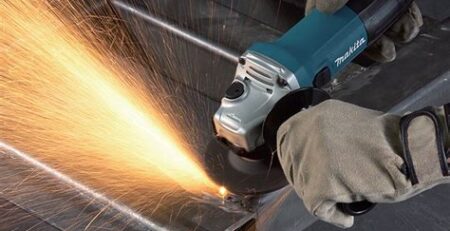
The angle grinder is a staple in fabrication shops and garages. It cuts, grinds, polishes, and strips. It is also, statistically, one of the most dangerous handheld power tools in existence. Spinning a disc at 10,000+ RPM inches from your body commands respect. Complacency with an angle grinder doesn’t result in a nick; it results in a trip to the ER.
Why is it Dangerous?
Unlike a drill that might twist your wrist if it jams, an angle grinder has high rotational energy. If the disc binds or shatters:
- Kickback: The tool is violently thrown back at the operator.
- Shrapnel: A shattering disc explodes into fragments traveling at bullet-like speeds.
The Golden Rules of Grinder Safety
1. The Guard Stays ON
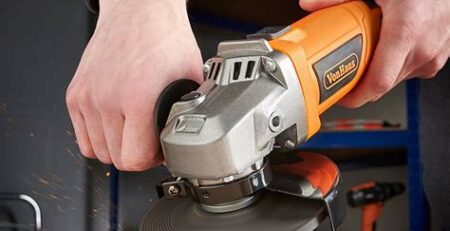
This is non-negotiable. The guard redirects sparks and, more importantly, protects you if the disc explodes. Removing the guard to fit a larger disc or get into a tight spot is the most common cause of severe injury.
2. Two Hands, Always
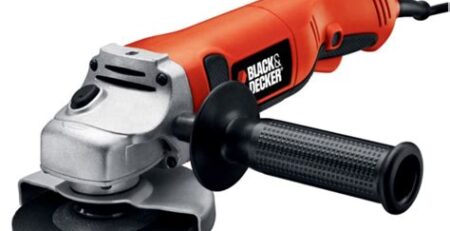
Angle grinders generate significant torque. Use the side handle. Holding the tool with one hand significantly reduces your control during a kickback event.
3. PPE (Personal Protective Equipment)
Standard safety glasses are not enough. You need:
- Face Shield: Worn OVER safety glasses.
- Hearing Protection: Grinders are loud.
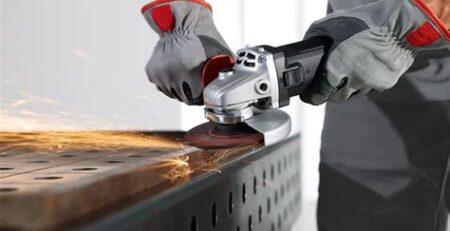
- Gloves: Leather gloves protect against sparks and heat, but ensure they fit tightly so they don’t get caught in the spinning disc.
- Flame-resistant clothing: Synthetic fleece can melt into your skin from sparks. Wear cotton or leather.
4. Inspect Your Discs
Before mounting a disc, check it for cracks or chips. A cracked disc will fly apart under load. Also, check the expiration date on the metal ring of abrasive discs (yes, they expire!). The bonding agent degrades over time.
5. Mind the RPM
Never put a disc rated for 6,000 RPM on a grinder that spins at 11,000 RPM. The centrifugal force will tear the disc apart. Match the accessory to the tool.
6. Position Your Body
Stand out of the “line of fire.” If the disc shatters or the tool kicks back, it usually happens in the plane of rotation. Don’t align your face or body directly with the cutting wheel.
7. Let the Tool Do the Work
Don’t force the grinder. Pressing too hard increases heat and the chance of binding. If the disc isn’t cutting, it’s either dull or the wrong type for the material.
Conclusion
The angle grinder is indispensable, but it is unforgiving. Every time you pick it up, take 30 seconds to inspect the disc, adjust the guard, and put on your face shield. Safety isn’t about being slow; it’s about making sure you can finish the project—and the next one.







Leave a Reply